


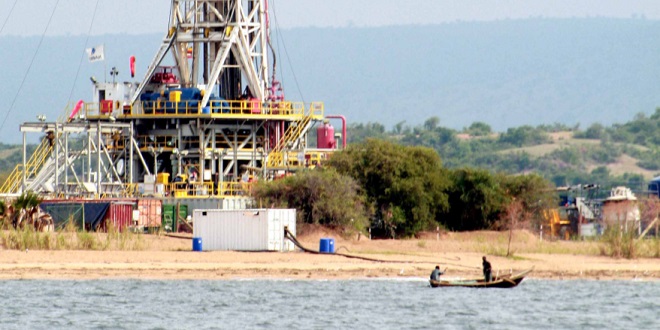
The main disagreements, which needs to be resolved with the oil companies stems from Total E&P and CNOOC’s purchase of majority of Tullow’s stake in Uganda’s oil fields.
The trio control 100% of Uganda’s oil fields currently under development; initially with 33% each for Tullow, CNOOC, and Total.
Tullow’s share was cut in January 2017 when it offered 21.57 % of its share for sale. Initially, the deal was to sale to Total E&P; however, CNOOC insisted on its rights and they shared the Tullow offer 50/50. That left Tullow with 11% of the oil fields.
At this stage, however, another challenge appeared. Since Tullow would stop operating its assets; the question arose around who would operate these assets.
This became contentious because, since Tullow first negotiated with it, Total E&P had already integrated these assets into its bigger project also known as Tilenga.
But CNOOC again insisted on its rights until President Museveni intervened and offered CNOOC another deal an exploration block. That got them to surrender the operatorship to Total E&P. Then the dispute over a $ 167 million tax bill emerged. This too appeared resolved in January.
Insiders say both government and the oil companies were in the midst of concluding documentation on how this $ 82 million (exgratia pay) would be treated when yet another huddle emerged.
The oil companies want to inherit Tullow oil’s recoverable costs. Most importantly, this means that if Total and CNOOC start making income, they would not be charged tax until all these costs are deducted. The government has refused this position.
Museveni brings optimism
As the negotiation, posturing, and court cases rage, President Museveni and executives of oil companies are keeping their cards close to their chests. But industry observers are reading into anything they can find to give a sense of the direction of things.
So when on June 6 while reading the state of the nation address President Museveni said the commencement of oil and gas production and work on the oil pipeline and the refinery “will be starting soon”, it was seen as a hint of optimism.
The President also said that work on three key oil roads– Karugutu-Ntoroko and Kabwoya-Buhuka (98km), Masindi-Biso; Hohwa-Nyarongwa-Kyarusheshe-Butore and Kabale-Kiziramfumbi, and Lusalira-Nkonge (97km), would commence in the new financial year.
Stakes are high. Uganda’s ability to dig itself out of the current debt hole and guarantee future economic growth prospects have been pegged on activating oil investments by the World Bank, International Monitory Fund (IMF) and the officials at the Finance Ministry.
Indeed in the state of the nation address, President Museveni cited the commencement of oil as part of the basis for the country’s “very positive” economic growth outlook.
Despite economic growth picking up from 4.5% in 2016 to 6% since last year, it can only be sustained and possibly improved by the expected dividend from oil related investments; in infrastructure projects like oil roads, pipelines, refinery, and other oil processing facilities. This could gradually bring in some estimated $ 20 billion (Approx. Shs75 trillion).
While the oil companies will be the spenders, they also stand to make a big chunk of their money in this phase as some of the work will be subcontracted to their sister companies. Continued delays, therefore, hurt both these companies and the country.




0 Comments